Best Mourning Gecko Heating: Your Complete Guide to Ideal Temps
Discover the best mourning gecko heating solutions and create an ideal environment for your tiny arboreal companions. Learn about optimal temperatures, humidity, and essential care for thriving geckos.


This article contains affiliate links. If you make a purchase through these links, we may earn a small commission at no extra cost to you. See our affiliate disclosure for details.
We recommend 5 picks here. Our top choice is the Jump Start Digital Thermostat — check price and availability below.
How we choose: we compare published specifications against the care requirements in veterinary and species-care literature, and weigh those against what long-time keepers report. We do not test products ourselves and we do not restate Amazon star ratings. The 5 sources behind this article are listed at the bottom.
Quick Comparison
- Primary Function
- Temperature Regulation
- Light Output
- None
- Thermostat Integration
- Direct Heat Control
- Environmental Scope
- Specific Heating Zone
- Average Price Range
- $20-40
- Primary Function
- Radiant Heat Source
- Light Output
- None (infrared only)
- Thermostat Integration
- Required for Safety
- Environmental Scope
- Enclosure Basking/Ambient
- Average Price Range
- $40-70
- Primary Function
- Essential UVB Light
- Light Output
- Visible Light + UVB
- Thermostat Integration
- Optional (Timer)
- Environmental Scope
- Enclosure Wide Coverage
- Average Price Range
- $60-90
- Primary Function
- Temp & Humidity Monitoring
- Light Output
- Digital Display
- Thermostat Integration
- Not Applicable
- Environmental Scope
- Spot/Ambient Monitoring
- Average Price Range
- $15-25
- Primary Function
- Complete Gecko Nutrition
- Light Output
- None
- Thermostat Integration
- Not Applicable
- Environmental Scope
- Internal (Consumption)
- Average Price Range
- $10-20
Prices are estimates only. Actual prices on Amazon may vary.
Mourning geckos are tiny, fascinating reptiles that make wonderful pets. These parthenogenic geckos are active, curious, and can thrive in a well-set-up enclosure. However, one of the most critical aspects of their care is providing the correct heating. Getting the temperatures right is key to keeping your mourning geckos healthy and happy. This guide will walk you through everything you need to know about the best mourning gecko heating methods, along with other essential care tips.
Mourning Gecko Care: Optimal Heating and Lighting Requirements
Mourning geckos (Lepidodactylus lugubris) come from warm, humid tropical and subtropical regions. This means their captive environment needs to mimic these conditions closely. Proper heating isn't just about making them comfortable; it's vital for their metabolism, digestion, and overall immune function. Without the right temperatures, your geckos can't properly digest their food or fight off illness.
Your goal is to create a thermal gradient within the enclosure. This means having warmer spots and cooler areas. This way, your gecko can choose where to go to regulate its body temperature. Think of it like their own personal thermostat!
Lighting is also an important consideration. We'll discuss UVB later, but ambient lighting for a proper day/night cycle is crucial. You'll want about 12-14 hours of light during the day and complete darkness at night. This helps regulate their natural rhythms.
What Basking Temperatures Do Mourning Geckos Need?
Mourning geckos aren't big basking lizards like bearded dragons, but they still benefit from a warm spot. They appreciate a small basking area where they can warm up if needed. The ideal basking temperature for mourning geckos should be around 80-82°F (27-28°C). This can be achieved with a low-wattage heat lamp or a deep heat projector.
Remember, your geckos are small and delicate, so you need to be very careful not to let the basking spot get too hot. Always use a reliable thermostat to control any heat source. This prevents overheating and keeps your geckos safe. Monitor the temperatures regularly with a digital thermometer with a probe.
Optimal Ambient Temperatures for Mourning Geckos
Beyond the basking spot, you need to maintain appropriate ambient temperatures throughout the enclosure. During the day, the general air temperature should be between 72-78°F (22-26°C). At night, a slight temperature drop is natural and healthy for them. Nighttime temperatures can safely drop to 68-72°F (20-22°C).
If your room temperatures consistently fall below 68°F (20°C) at night, you'll need to provide supplementary nighttime heating. Ceramic heat emitters or deep heat projectors controlled by a thermostat are excellent choices. They provide heat without emitting light, which is essential for maintaining a natural day/night cycle.
Optimal Temperature & Humidity
Basking Temperature
80-82°F (27-28°C)
Ambient Day Temperature
72-78°F (22-26°C)
Ambient Night Temperature
68-72°F (20-22°C)
Light Cycle
12-14 hours light, complete darkness at night
Humidity Level
60-80%
Mourning Gecko Heating Equipment
Everything you need to get started
UVB Lighting Essentials
UVB Necessity
Essential for Vitamin D3 synthesis
Target UV Index (UVI)
0.5-1.0 in basking zone
Recommended Bulb
Compact fluorescent or Arcadia ShadeDweller
Replacement Schedule
Every 6-12 months
Detailed Reviews
1. Jump Start Digital Thermostat
Editor's Choice
Jump Start Digital Thermostat
Pros
- •Precise digital temperature control for safety
- •Prevents overheating and underheating of enclosures
- •Maintains stable thermal gradients for gecko comfort
- •Compatible with various heating elements
Cons
- •Requires proper probe placement for accurate readings
- •Adds an additional cost to the heating setup
- •May have limited outlet capacity for multiple devices
Bottom Line
This essential device provides precise temperature regulation for any heat source, preventing dangerous thermal fluctuations. It ensures your mourning gecko's enclosure remains within safe and optimal temperature ranges, crucial for their metabolic functions.
2. Deep Heat Projector (DHP)
Best Overall
Deep Heat Projector (DHP)
Pros
- •Emits beneficial radiant heat without visible light
- •Penetrates tissue for effective, naturalistic warming
- •Can be used 24/7 without disrupting day/night cycles
- •Creates a gentle, localized basking area
Cons
- •Requires a thermostat for safe operation and temperature control
- •Needs a ceramic heat resistant fixture for safe use
- •Higher initial cost compared to some basic heat lamps
Bottom Line
A Deep Heat Projector offers natural radiant heat without emitting any visible light, making it suitable for both day and night use. It provides deep tissue warming that mimics natural sunlight, crucial for the gecko's digestion and overall well-being.
3. Arcadia ShadeDweller UVB Kit
Premium Pick
Arcadia ShadeDweller UVB Kit
Pros
- •Provides low-level UVB optimized for crepuscular species
- •Supports essential Vitamin D3 synthesis
- •Aids in crucial calcium metabolism and bone health
- •Kit typically includes fixture for easy setup
Cons
- •Bulbs require replacement periodically for efficacy
- •May be oversized for very small nano enclosures
- •Requires a dedicated space above the enclosure
Bottom Line
This linear UVB system delivers low-level, safe ultraviolet B radiation tailored for crepuscular reptiles like mourning geckos. It is vital for facilitating Vitamin D3 synthesis and proper calcium metabolism, promoting long-term bone health.
4. Exo Terra Digital Thermo-Hygrometer
Best Value
Exo Terra Digital Thermo-Hygrometer
Pros
- •Simultaneously monitors temperature and humidity
- •Digital display provides accurate and easy-to-read data
- •Includes a remote probe for flexible placement within the enclosure
- •Essential for mimicking natural tropical conditions
Cons
- •Typically requires batteries for operation
- •Probe can be affected by excessive moisture over time
- •Placement of the probe is critical for accurate readings
Bottom Line
Accurate monitoring of both temperature and humidity is critical for mourning geckos, originating from humid tropical regions. This digital unit with a remote probe allows for precise, real-time tracking of crucial environmental parameters.
5. Pangea Gecko Diet
Budget Pick
Pangea Gecko Diet
Pros
- •Provides complete and balanced nutrition for geckos
- •Easy to prepare by mixing with water
- •Highly palatable and readily accepted by most geckos
- •Available in various flavors to prevent feeding boredom
Cons
- •Requires fresh preparation every 24-48 hours
- •Not a primary heat or light source for the enclosure
- •Initial investment in a larger quantity might be higher
Bottom Line
This high-quality crested gecko diet serves as the foundational food source for mourning geckos, ensuring comprehensive nutrition. Its convenient powder form makes preparation straightforward, delivering a balanced meal essential for healthy growth and activity.
How to Heat a Mourning Gecko Enclosure
There are several effective ways to provide the best mourning gecko heating. The method you choose often depends on your specific enclosure setup and ambient room temperature. Here's a breakdown of common heat sources:
-
Heat Mats (Under-Tank Heaters): These adhesive pads stick to the outside bottom or side of the terrarium. They provide gentle, radiant heat. For mourning geckos, if you use a heat mat, place it on the side of the enclosure rather than the bottom. This allows for better temperature regulation and prevents potential burns if the gecko burrows. Always, always, always use a thermostat for reptiles with a heat mat. This is non-negotiable for safety. For more details on safe heat mat use, check out our guide on the Best Heating Mat for Bearded Dragon (2026): 5 Safe Under-Tank Options.
-
Ceramic Heat Emitters (CHEs): These bulbs screw into a standard light fixture and emit heat without light. They're great for providing ambient heat, especially at night, or boosting daytime temperatures without disrupting the light cycle. Like heat mats, CHEs must be connected to a thermostat to prevent overheating. Place them above the enclosure, safely out of reach of your geckos.
-
Deep Heat Projectors (DHPs): DHPs are newer heating technology. They emit infrared-A and infrared-B radiation, which penetrates deeper into a reptile's tissue, mimicking natural sun warmth more effectively than other heat sources. They produce very little to no visible light, making them suitable for both day and night use. Again, a [reptile thermostat](https://www.amazon.com/dp/B01I15S6OM?tag=krawlo-20 is essential for safety and control.
-
Low-Wattage Incandescent or Halogen Bulbs: For creating a small basking spot during the day, a low-wattage bulb (25-40 watts) can work. Be sure to measure the basking temperature carefully. These bulbs also provide visible light, contributing to the daytime cycle. They should be turned off at night.
Regardless of your chosen heat source, a [digital thermometer/hygrometer with a probe](https://www.amazon.com/dp/B07GR65CNT?tag=krawlo-20 is indispensable for monitoring your enclosure's conditions. Place the probe near the basking spot and another in a cooler area to ensure your gradient is correct. According to ReptiFiles, accurate temperature monitoring is crucial for successful mourning gecko care (ReptiFiles.com).
Do Mourning Geckos Need UVB?
Yes! While mourning geckos are primarily crepuscular (most active at dawn and dusk), they still benefit significantly from UVB lighting. Many people mistakenly believe nocturnal or crepuscular reptiles don't need UVB, but this isn't true. UVB light allows them to synthesize Vitamin D3, which is essential for calcium absorption and preventing metabolic bone disease (MBD).
A low-level UVB bulb, such as a compact fluorescent UVB bulb or a linear fluorescent Arcadia ShadeDweller, is appropriate. The strength of the UVB bulb depends on the distance from the basking area and the mesh top of your enclosure. Aim for a low UV index (UVI) of 0.5-1.0 in the basking zone. Replace UVB bulbs every 6-12 months, as their UVB output diminishes over time, even if the visible light still works.
For more information on selecting the right UVB, you can reference our article on the Best UVB Light for Crested Gecko: Ultimate Care Guide, as the principles are very similar for arboreal geckos.
What Humidity Levels Do Mourning Geckos Need?
High humidity is just as important as proper heating for mourning geckos. They need relative humidity levels of 60-80%. This humidity helps with proper shedding and respiratory health. Consistent low humidity can lead to stuck shed and other health issues.
To achieve and maintain these levels, you'll need to mist the enclosure at least once or twice a day. Use a [reptile mister](https://www.amazon.com/dp/B0BZGN4JF5?tag=krawlo-20 or a [spray bottle](https://www.amazon.com/dp/B0F2G7L4JB?tag=krawlo-20 to wet down the leaves and sides of the terrarium. You want to see droplets on the surfaces, which your geckos will drink. Allowing the enclosure to dry out slightly between mistings is also important to prevent mold and fungal growth.
Live plants in a bioactive setup are fantastic for helping to maintain humidity naturally. A good substrate that holds moisture well, like coco fiber, also contributes significantly. Always monitor humidity with your digital hygrometer.
How Much Space Do Mourning Geckos Need?
Mourning geckos are tiny, but they are active and social. They thrive in colonies, so you'll likely have more than one. For a small colony of 2-3 geckos, a 10-gallon (approx. 38-liter) tank is the absolute minimum, but a vertical 12x12x18 inch (approx. 30x30x45 cm) or a 10-gallon tall tank is much better. Larger is always better, especially if you plan to have a bigger colony. These geckos appreciate vertical space for climbing and exploring.
Consider a 20-gallon (approx. 75-liter) tall tank for a thriving colony of 4-6 geckos. Remember, they multiply quickly, so plan for population growth!
What Substrate is Good for Mourning Geckos?
The right substrate does more than just look nice; it helps maintain humidity and can be part of a bioactive setup. Here are some good options:
- Coco Fiber: Excellent for holding moisture and mimicking a natural tropical environment. It's affordable and widely available.
- Sphagnum Moss: Great for boosting humidity in specific areas or mixed with other substrates. It also looks very natural.
- Coco Husk Chips: Provide a good base for humidity retention and offer some texture.
- Bioactive Substrate Mix: For those wanting a self-sustaining ecosystem, a mix of coco fiber, sphagnum moss, cypress mulch, and organic topsoil (without pesticides or fertilizers) is ideal. This type of substrate, combined with a drainage layer and live plants, supports a clean-up crew (isopods and springtails) that breaks down waste. The Bio Dude offers excellent resources on bioactive setups for mourning geckos (TheBioDude.com).
Avoid substrates like sand, pure bark chips, or reptile carpets, as these don't hold humidity well or can pose health risks. For more on choosing appropriate substrates, read our guide on the Best Substrate for Leopard Geckos: A Complete Guide.
What Décor Can You Use in a Mourning Gecko Terrarium?
Mourning geckos are arboreal, meaning they love to climb! Providing plenty of climbing opportunities and hiding spots is crucial for their well-being. Think vertical, varied, and secure.
- Branches and Cork Bark: Offer horizontal and vertical branches of varying thicknesses. Cork bark flats and rounds provide excellent climbing surfaces and natural hiding spots. Ensure everything is securely anchored so it won't fall and injure your geckos.
- Live Plants: Pothos, Ficus pumila, bromeliads, and various ferns are excellent choices. They provide cover, climbing surfaces, and help maintain humidity. Plus, they make the enclosure look lush and natural. Always choose reptile-safe plants.
- Fake Plants: High-quality silk or plastic plants can supplement live plants or be used as the primary foliage. Ensure they are easy to clean and don't have sharp edges.
- Leaf Litter: A layer of clean, pesticide-free leaf litter (like oak or maple leaves) on the substrate provides enrichment, hiding places, and supports a clean-up crew in bioactive setups. DubiaRoaches.com emphasizes the importance of a well-furnished enclosure for mourning geckos.
What Do Mourning Geckos Eat?
Mourning geckos are omnivores, meaning they eat both fruit-based diets and insects. A varied diet is essential for their health.
- Crested Gecko Diet (CGD): This is the staple of their diet. High-quality powdered CGD (such as Repashy Crested Gecko Diet or Pangea Gecko Diet) mixed with water provides a complete nutritional meal. Offer this 2-3 times a week.
- Insects: Supplement their diet with small feeder insects 1-2 times a week. Pinhead crickets, small roaches (like dubia roach nymphs), and fruit flies are good options. Always dust insects with a [calcium supplement with D3](https://www.amazon.com/dp/B0B57KL69G?tag=krawlo-20 and a [multivitamin supplement for reptiles](https://www.amazon.com/dp/B00BS96HRM?tag=krawlo-20 on a rotating schedule.
Always provide fresh, clean water in a small, shallow dish, although they will primarily drink droplets from misting. Remove uneaten food after 24 hours to prevent mold and bacterial growth.
Do Mourning Geckos Like to Be Handled?
Generally, no. Mourning geckos are extremely fast, tiny, and delicate. They are not pets that typically enjoy or tolerate handling. They are easily stressed by being held and can be very difficult to catch if they escape your hands.
It's best to enjoy these geckos by observing them in their enclosure. If you need to move them for cleaning or health checks, it's usually less stressful for them if you guide them into a small cup or deli container rather than grabbing them directly. Minimal handling helps keep them calm and reduces stress. Focus on creating a perfect habitat for them to thrive in, and they will reward you with their active and engaging behaviors.
Troubleshooting Common Heating Issues
Sometimes, even with the best equipment, things can go wrong. Here are a few common issues and how to address them:
- Enclosure is Too Hot: If your basking spot or ambient temperatures are consistently too high, immediately check your thermostat. Ensure the probe is correctly placed and the thermostat is set to the right temperature. You might need a lower wattage bulb or to adjust the placement of your heat source further away. Overheating can be deadly for geckos.
- Enclosure is Too Cold: If temperatures are too low, especially at night, your geckos will become sluggish and prone to illness. Increase the wattage of your heat source (still controlled by a thermostat!), add another heat source, or ensure your room temperature isn't too cold. Make sure there are no drafts affecting the enclosure.
- Humidity Problems: If humidity is too low, increase misting frequency or duration. You can also add more moisture-retaining substrate or live plants. If humidity is too high, ensure proper ventilation in your enclosure and allow the substrate to dry out between mistings.
Always remember to check your equipment regularly. Thermostats can fail, and bulbs burn out. Having backup heating and monitoring equipment can be a lifesaver for your mourning geckos. Consistency and careful monitoring are key to providing the best mourning gecko heating and overall care.
Reading Next
Creating the perfect environment for your mourning geckos is a rewarding experience. By focusing on proper heating, lighting, humidity, and enrichment, you'll ensure your tiny companions live long, healthy lives. Their needs are specific, but with the right setup, they are relatively easy to care for.
Want to dive deeper into gecko care? Explore our other guides to expand your reptile husbandry knowledge!
Our Final Verdict
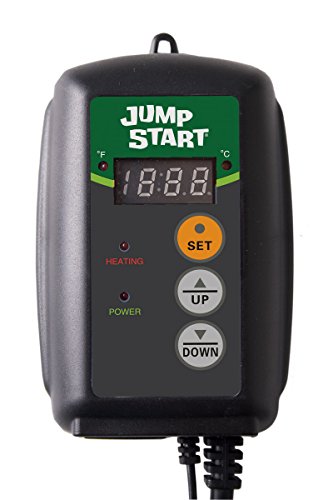
Jump Start Digital Thermostat
This essential device provides precise temperature regulation for any heat source, preventing dangerous thermal fluctuations. It ensures your mourning gecko's enclosure remains within safe and optimal temperature ranges, crucial for their metabolic functions.

Deep Heat Projector (DHP)
A Deep Heat Projector offers natural radiant heat without emitting any visible light, making it suitable for both day and night use. It provides deep tissue warming that mimics natural sunlight, crucial for the gecko's digestion and overall well-being.

Arcadia ShadeDweller UVB Kit
This linear UVB system delivers low-level, safe ultraviolet B radiation tailored for crepuscular reptiles like mourning geckos. It is vital for facilitating Vitamin D3 synthesis and proper calcium metabolism, promoting long-term bone health.
Frequently Asked Questions
To heat a mourning gecko enclosure, use a low-wattage heat lamp or deep heat projector for a basking spot (80-82°F) and maintain ambient temperatures of 72-78°F during the day, dropping to 68-72°F at night. Always use a thermostat to regulate heat sources and prevent overheating.
References & Sources
- https://reptifiles.com/mourning-gecko-care/mourning-gecko-temperatures-humidity/
- https://www.thebiodude.com/blogs/gecko-caresheets/mourning-gecko-bioactive-care-and-maintenance?srsltid=AfmBOoqvpnPpAKIVEpM4FcocHaOvSJ_3wESVAf40xZirZxTqYuKPjnSD
- https://dubiaroaches.com/blogs/gecko-care/how-to-care-for-your-mourning-gecko?srsltid=AfmBOooOZmxTFgUSAkISH0yhGj8adm5-efFRgWFyBFEXX_PhF9AcQtFD
- https://reptifiles.com/mourning-gecko-care/
- https://reptifiles.com/mourning-gecko-care/shopping-list/
Related Articles

Best Red Footed Tortoise Heating Setup (2026 Guide)
Struggling to get your Red-Footed Tortoise's temperatures right? Our expert guide covers the best heating options, setup tips, and why a thermostat is essential.

Best Pac Man Frog Heating: A Complete Setup Guide (2026)
Struggling with the best Pac Man frog heating setup? Our expert guide covers the safest, most effective methods, from heat mats to CHEs, ensuring your frog's health and comfort.

Best Mexican Black Kingsnake Heating: Top Picks
Find the best Mexican black kingsnake heating setup with our expert guide. Learn target temps, top products, and thermostat tips for a healthy snake.