Best Pac Man Frog Heating: A Complete Setup Guide (2026)
Struggling with the best Pac Man frog heating setup? Our expert guide covers the safest, most effective methods, from heat mats to CHEs, ensuring your frog's health and comfort.


This article contains affiliate links. If you make a purchase through these links, we may earn a small commission at no extra cost to you. See our affiliate disclosure for details.
We recommend 4 picks here. Our top choice is the BN-LINK Digital Heat Mat Thermostat Controller — check price and availability below.
How we choose: we compare published specifications against the care requirements in veterinary and species-care literature, and weigh those against what long-time keepers report. We do not test products ourselves and we do not restate Amazon star ratings. The 3 sources behind this article are listed at the bottom.
Quick Comparison
- Primary Role
- Temperature Controller
- Light Output
- None
- Provides Direct Heat
- No
- Regulates Temperature
- Yes
- Measures Humidity
- No
- Primary Role
- Heat Source
- Light Output
- None
- Provides Direct Heat
- Yes
- Regulates Temperature
- No (requires controller)
- Measures Humidity
- No
- Primary Role
- Heat Source
- Light Output
- None
- Provides Direct Heat
- Yes
- Regulates Temperature
- No (requires controller)
- Measures Humidity
- No
- Primary Role
- Environmental Monitor
- Light Output
- None
- Provides Direct Heat
- No
- Regulates Temperature
- No
- Measures Humidity
- Yes
Prices are estimates only. Actual prices on Amazon may vary.
Getting the temperature right for your Pacman frog isn't just a suggestion—it's the cornerstone of their health. These adorably round, sit-and-wait predators come from the warm, humid regions of South America. They can't produce their own body heat, so they rely entirely on their environment to regulate their temperature. A frog that's too cold is a frog that can't digest its food, can't fight off illness, and won't live a long, healthy life.
But figuring out the best Pac Man frog heating solution can feel complicated. With heat mats, ceramic emitters, and various lamps on the market, it's easy to get overwhelmed. Don't worry, we're here to cut through the confusion.
As certified herpetological specialists, we've set up hundreds of amphibian habitats. In this guide, we'll walk you through the safest and most effective ways to heat your Pacman frog's enclosure, explain the gear you absolutely need, and show you how to avoid common, dangerous mistakes.
Why Proper Heating is Non-Negotiable
Pacman frogs, like all amphibians, are ectothermic (or "cold-blooded"). Their metabolism, digestion, and immune system are all directly linked to the temperature of their surroundings. Without the right heat, their bodies simply can't function properly.
When a Pacman frog is too cold for too long, several serious problems can occur:
- Poor Digestion: They can't break down their food, which can lead to regurgitation or, even worse, impaction and internal rot. This is one of the most common causes of death in captive Pacman frogs.
- Lethargy and Inactivity: A chilly frog is a sluggish frog. They'll lose their appetite and spend all their time burrowed, not because they're content, but because they lack the energy to do anything else.
- Weakened Immune System: Chronic cold stress suppresses their immune response, making them highly susceptible to bacterial and fungal infections that a healthy frog could easily fight off.
This is why providing a proper temperature gradient is not just about comfort; it's about survival.
Temperature Zones Quick Reference
Warm Side
80-83°F (27-28°C)
For digestion, activity, and metabolic function
Cool Side
75-78°F (24-26°C)
Retreat zone to prevent overheating
Nighttime
72-78°F (22-26°C)
Slight temperature drop mimics natural environment
Minimum Safe Threshold
72°F minimum, never below 70°F
Extended periods below 70°F cause serious health issues
Ceramic Heat Emitter vs Under-Tank Heater
Side-by-side comparison
| Feature | Ceramic Heat Emitter (CHE) | Under-Tank Heater (UTH) |
|---|---|---|
| Ambient Air Temperature | ★Great for raising entire enclosure temperature | Less effective in cold rooms |
| Light Production | Zero light — perfect for day/night use | No light — works day and night |
| Installation | Requires ceramic-based heat lamp dome | ★Simple adhesive; mount on enclosure side only |
| Energy Efficiency | Highly efficient heat output | Very energy efficient for the heat provided |
| Humidity Management | Can dry out air; requires monitoring | ★Better for maintaining humidity levels |
| Thermostat Requirement | Proportional/dimming thermostat (prevents swings) | ★Basic on/off thermostat sufficient |
Our Take: CHE for 24/7 ambient heating; UTH for creating gentle thermal gradients with simpler control.
Consequences of Improper Heating
What you need to know
Poor digestion → regurgitation, impaction, internal rot (leading cause of death in captive Pacman frogs)
Lethargy and inactivity → loss of appetite, excessive burrowing due to energy depletion
Suppressed immune system → susceptibility to bacterial and fungal infections
Ectothermic metabolism completely depends on environmental temperature for digestion, immunity, and function
Thermostat Types: Which Do You Need?
Side-by-side comparison
| Feature | On/Off Thermostat | Proportional/Dimming Thermostat |
|---|---|---|
| Cost | ★Cheaper option | More expensive investment |
| Best For | Heat mats (UTH) | Ceramic Heat Emitters and Deep Heat Projectors |
| Temperature Stability | Simple on/off cycling | ★Gentle pulsing/dimming prevents large swings |
| Prevents Dangerous Overheating | Yes — essential safety feature | ★Yes — with more precise control |
| Reliability | Simple, proven design (e.g., BN-LINK models) | Advanced control, more adjustment capability |
Our Take: On/off thermostat is sufficient and cost-effective for heat mats; proportional thermostat is superior for CHEs to prevent temperature swings and overheating.
Detailed Reviews
1. BN-LINK Digital Heat Mat Thermostat Controller
Best Overall
BN-LINK Digital Heat Mat Thermostat Controller
Pros
- •Ensures precise temperature control for heating elements
- •Prevents dangerous overheating and potential burns
- •Reliable and widely used in reptile keeping
- •Affordable safety device for any setup
Cons
- •Requires a separate heating element to function
- •Adds an extra component to manage in the setup
- •Probe placement can be critical for accurate readings
Bottom Line
Provides crucial temperature regulation for reptile heating elements, preventing dangerous overheating and ensuring amphibian safety. Its reliable performance and affordability make it an essential component for any responsible Pacman frog enclosure.
2. VIVOSUN Reptile Heat Mat
Best Value
VIVOSUN Reptile Heat Mat
Pros
- •Affordable and energy-efficient heat source
- •Creates a gentle, consistent warm spot for digestion
- •Does not emit light, maintaining natural day/night cycles
- •Easy to install on the side of a terrarium
Cons
- •Requires a separate thermostat for safe operation
- •Primarily provides localized heat, not ambient air warmth
- •Side mounting is crucial for Pacman frogs, unlike under-tank placement for other reptiles
Bottom Line
An economical choice for localized belly heat, crucial for digestion in Pacman frogs when mounted on the side of the enclosure. It must always be connected to a thermostat to prevent burns and ensure safe, consistent temperatures.
3. REPTI ZOO Reptile Ceramic Heat Emitter
Editor's Choice
REPTI ZOO Reptile Ceramic Heat Emitter
Pros
- •Provides 24/7 heat without disrupting light cycles
- •Effectively raises ambient air temperatures
- •Durable ceramic construction for long-lasting use
- •Ideal for colder rooms needing consistent warmth
Cons
- •Can reach very high surface temperatures, requiring a protective dome/guard
- •Must be used with a thermostat to prevent overheating
- •Can contribute to lower humidity levels if not managed properly
Bottom Line
An excellent non-light emitting heat source for maintaining consistent ambient temperatures day and night, especially in cooler environments. It is vital to use this device with a dimming or pulse proportional thermostat for safety and to prevent excessive heat.
4. Govee Thermometer Hygrometer (2-Pack)
Premium Pick
Govee Thermometer Hygrometer (2-Pack)
Pros
- •Accurately monitors both temperature and humidity
- •Two-pack enables monitoring of warm and cool sides simultaneously
- •Provides crucial data for maintaining a healthy environment
- •Often features remote monitoring via app (assuming Govee standard functionality)
Cons
- •Does not control heating elements, purely for monitoring
- •Requires batteries that need periodic replacement
- •Placement is key for accurate readings, avoiding direct heat or misting areas
Bottom Line
Essential for accurately monitoring both temperature and humidity across the enclosure, providing critical data for maintaining optimal conditions for Pacman frogs. The two-pack design allows for effective measurement of the necessary thermal and humidity gradients.
The Ideal Pacman Frog Temperature Gradient
A single temperature isn't enough. You need to provide a "thermal gradient," which is just a fancy term for a range of temperatures from a warm side to a cool side. This allows your frog to move around and choose the exact temperature it needs at any given moment.
Here are the target temperatures you should aim for:
| Area of Enclosure | Ideal Temperature Range | Purpose |
|---|---|---|
| Warm Side | 80-83°F (27-28°C) | For digestion, activity, and metabolic function |
| Cool Side | 75-78°F (24-26°C) | A retreat to cool down and prevent overheating |
| Nighttime | 72-78°F (22-26°C) | A slight drop mimics their natural environment |
Never let the temperature in the entire tank drop below 72°F for extended periods. Consistent temperatures below 70°F can quickly lead to health issues. Your goal is to create these two zones so your frog can self-regulate its body temperature effectively.
Best Heating Methods for Pacman Frogs
There are a few excellent ways to provide heat. The best Pac Man frog heating method for you will depend on your room's ambient temperature and your enclosure type. Let's break down the pros and cons of the top contenders.
1. Under-Tank Heaters (UTH) / Heat Mats
An [Under-Tank Heater (UTH)](https://www.amazon.com/dp/B08C93ZGPJ?tag=krawlo-20 is a vinyl mat with a heating element inside that sticks to the outside of the glass. This is one of the most popular methods for heating Pacman frogs.
CRITICAL SAFETY NOTE: For a burrowing species like a Pacman frog, you must mount the heat mat on the SIDE of the enclosure, not underneath it. A frog that burrows down to escape heat could press itself directly against the hot glass at the bottom, leading to severe burns. Placing it on the side warms the substrate and air from one end, creating a perfect horizontal gradient.
Pros:
- Excellent at creating a gentle, consistent warm side.
- Energy efficient for the heat they provide.
- Doesn't produce light, so it won't disturb your frog's day/night cycle.
Cons:
- MUST be regulated with a thermostat to be safe.
- Less effective at raising the overall ambient air temperature in a cold room.
2. Ceramic Heat Emitters (CHE)
A [Ceramic Heat Emitter (CHE)](https://www.amazon.com/dp/B096JWWQMC?tag=krawlo-20 is a ceramic bulb that screws into a heat lamp dome. It produces heat but absolutely no light, making it a fantastic choice for 24-hour heating.
Pros:
- Provides only heat, perfect for day and night use.
- Great for raising the ambient air temperature in the entire enclosure.
- Long-lasting; a good CHE can last for years.
Cons:
- MUST be regulated with a thermostat to prevent dangerous overheating.
- Requires a specific, high-heat-rated dome fixture (usually ceramic-based).
- Can dry out the air, so you'll need to monitor your humidity levels closely and mist more often.
3. Deep Heat Projectors (DHP)
The Deep Heat Projector (DHP) is a more modern heating technology. It emits infrared radiation that penetrates deeper into your frog's tissues, heating them more efficiently, much like natural sunlight. It produces a very dim, diffused light.
Pros:
- Provides a very natural and effective form of heat.
- Doesn't disrupt the day/night cycle.
- Promotes natural basking and burrowing behaviors.
Cons:
- More expensive than CHEs or heat mats.
- MUST be regulated with a thermostat.
- Still a newer technology, so they can be harder to find.
What About Heat Lamps?
While you can use certain heat lamps, they are generally not the best option for Pacman frogs. These frogs are crepuscular/nocturnal and often stressed by bright, direct light. They spend most of their time burrowed, so a bright basking spot is largely wasted. If you need supplemental heat during the day, a very low-wattage daytime bulb could work, but a CHE or DHP is a superior 24/7 solution. Check out our Best Heat Lamps For Reptiles Comparison for more on different bulb types.
Avoid red or "night" bulbs. While marketed for nighttime use, there is growing evidence that many reptiles and amphibians can still perceive this light, which can disrupt their sleep cycle.
Essential Equipment for Safe Heating
Buying a heat source is only half the battle. Without the proper safety and monitoring equipment, even the best heater can become a serious hazard.
Thermostats: The #1 Most Important Tool
We cannot stress this enough: you must use a thermostat with any heating device. A heat mat or CHE plugged directly into the wall will run at its maximum temperature continuously, which can easily reach 120°F+ and cook your frog.
A thermostat has a probe that you place in the enclosure. It will turn the heater on and off (or dim it) as needed to maintain the target temperature you set. It's the single most important piece of equipment you will buy.
There are two main types:
- On/Off Thermostats: These are cheaper and work well for heat mats. The [BN-LINK Digital Heat Mat Thermostat](https://www.amazon.com/dp/B01I15S6OM?tag=krawlo-20 is a reliable and popular choice.
- Proportional (Dimming/Pulse) Thermostats: These are more expensive but are much better for CHEs and DHPs. They provide a more stable and gentle heat by pulsing or dimming the power to the heater, preventing large temperature swings.
Thermometers: Trust, But Verify
A thermostat controls the heat, but a thermometer verifies it. You need to know what the actual temperature is on both the warm and cool sides of the tank. The thermostat's reading only tells you the temperature at its specific probe location.
Use [digital probe thermometers](https://www.amazon.com/dp/B08R65W98H?tag=krawlo-20 for accurate readings. Place one probe on the substrate on the warm side and another on the cool side. A temperature gun is also a great tool for spot-checking surface temps anywhere in the habitat.
Avoid stick-on dial thermometers. They are notoriously inaccurate and only measure the temperature of the glass they're stuck to, not the air or substrate where your frog lives.
How to Set Up Your Pacman Frog's Heating: A Step-by-Step Guide
Ready to put it all together? Here's how to create the perfect heated habitat.
- Select Your Enclosure: A 10-gallon tank is a good start for a baby, with an adult needing a 20-gallon long. Glass or PVC enclosures work best.
- Add Substrate: Provide a deep, 3-4 inch layer of a moisture-retaining substrate like coconut fiber. This is crucial for burrowing and maintaining humidity.
- Install the Heater:
- If using a UTH: Adhere it to the outside wall on one side of the tank (e.g., the left or right side).
- If using a CHE/DHP: Securely mount the dome fixture on the screen lid above the same side you chose for the warm side.
- Connect to Thermostat: Plug the heater into the thermostat controller.
- Place the Probes: Place the thermostat's probe inside the enclosure on the warm side, about an inch above the substrate. Place your two digital thermometer probes on the substrate surface—one on the warm side and one on the cool side.
- Test and Adjust: Turn everything on and let it run for at least 24 hours. Monitor your thermometers and adjust the thermostat's set point until you have a stable, correct gradient. Do not put your frog in the tank until the temperatures are stable and safe.
Getting your frog's habitat right from the start is a key part of our overall Pac-Man Frog Care Guide, and heating is the most critical element to master.
Common Heating Mistakes to Avoid
- No Thermostat: The most dangerous mistake. It's not a matter of if an unregulated heater will fail or overheat, but when.
- UTH Under the Tank: As mentioned, this is a severe burn risk for a burrowing Pacman frog. Always mount on the side.
- Using Heat Rocks: Never, ever use heat rocks. They are famous for malfunctioning and causing horrific burns. They should be banned from sale.
- Incorrect Probe Placement: Placing the thermostat probe right under the heater or too far away will give false readings, leading to an improperly heated tank.
- Forgetting Humidity: CHEs can dry out an enclosure. Be sure to monitor humidity (aim for 60-80%) and mist with dechlorinated water as needed.
Choosing the best Pac Man frog heating setup comes down to a few key principles: creating a gradient, using the right tool for the job (UTH or CHE/DHP), and making it all safe with a thermostat and digital thermometers. By following this guide, you can be confident that you're providing the perfect environment for your pet to thrive, not just survive. A warm frog is a happy, hungry, and healthy frog.
Our Final Verdict

BN-LINK Digital Heat Mat Thermostat Controller
Provides crucial temperature regulation for reptile heating elements, preventing dangerous overheating and ensuring amphibian safety. Its reliable performance and affordability make it an essential component for any responsible Pacman frog enclosure.

VIVOSUN Reptile Heat Mat
An economical choice for localized belly heat, crucial for digestion in Pacman frogs when mounted on the side of the enclosure. It must always be connected to a thermostat to prevent burns and ensure safe, consistent temperatures.
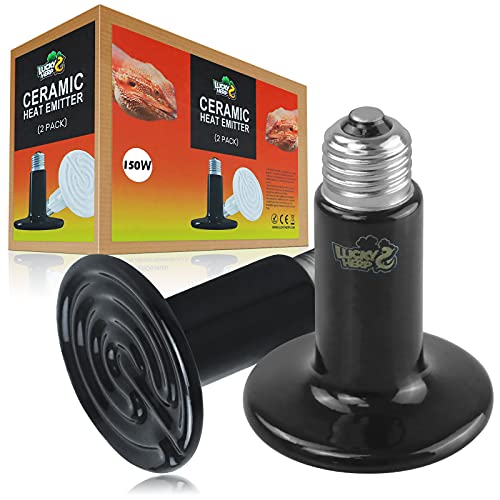
REPTI ZOO Reptile Ceramic Heat Emitter
An excellent non-light emitting heat source for maintaining consistent ambient temperatures day and night, especially in cooler environments. It is vital to use this device with a dimming or pulse proportional thermostat for safety and to prevent excessive heat.
Frequently Asked Questions
The best way is to use an under-tank heater placed on the side of the tank or a ceramic heat emitter (CHE) in a dome on top. Both methods must be connected to a thermostat to control the temperature and keep your frog safe from overheating. Aim for a warm side of 80-83°F and a cool side of 75-78°F.
References & Sources
Related Articles

Best Pac Man Frog Lighting: A Simple Guide for Keepers
Confused about the best pac man frog lighting? Our guide demystifies UVB, heating, and day/night cycles to ensure your amphibian thrives. Find top picks here!

Best Heating for White's Tree Frog: A Practical Guide
Discover the best ways to keep your White's Tree Frog warm and healthy with practical, science-based heating solutions.

Best Tree Frog Pets: Your Guide to Top Arboreal Amphibians
Looking for the best tree frog pet? Our expert guide helps you choose the perfect arboreal amphibian, covering care needs, temperament, and species specifics.